Blood, Sand, and Storylines: Why Southwest Crime Fiction Owns the Cultural Conversation
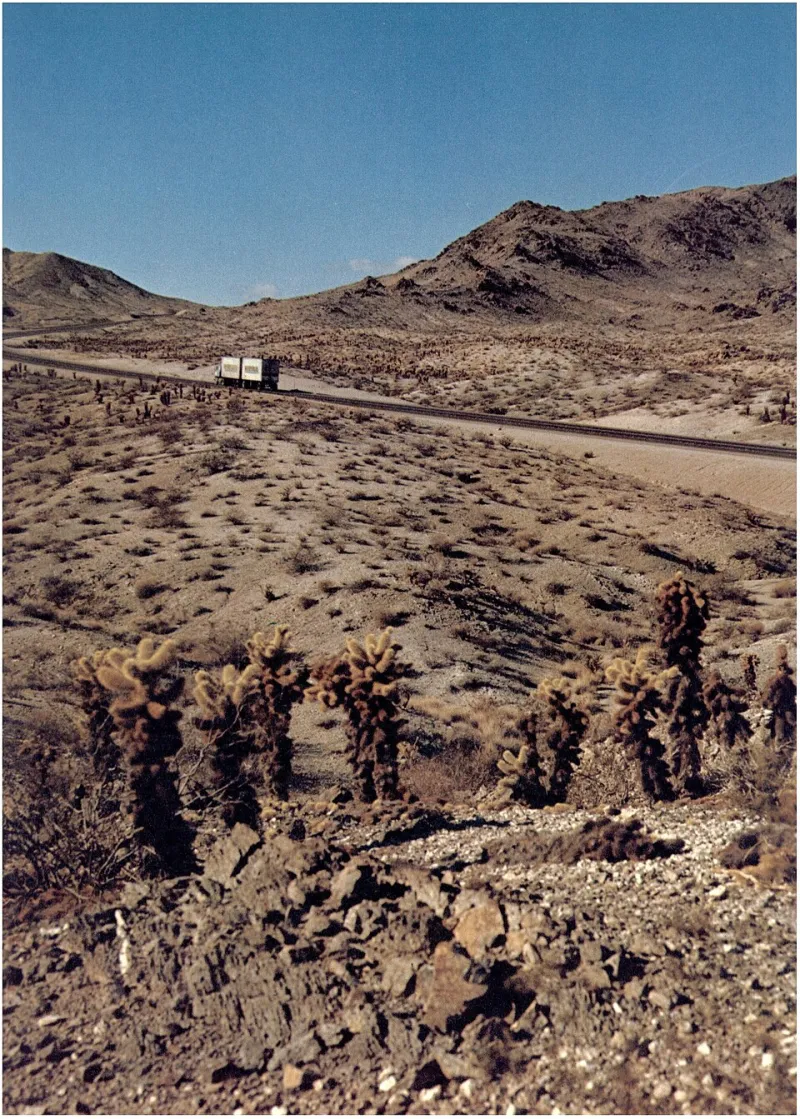
Photo: Federal Highway Administration, Public domain, via Wikimedia Commons
There's a particular kind of dread that only the desert can manufacture. It's not the shadowy alleyway dread of a Raymond Chandler paperback or the rain-slicked urban menace of a classic New York crime thriller. It's something slower, hotter, and in a lot of ways, more honest. The American Southwest — stretching across New Mexico, Arizona, Texas, Nevada, and beyond — has quietly become the most fertile ground in American crime storytelling, and audiences have been eating it up for the better part of twenty years.
Call it desert noir. Call it border fiction. Call it whatever you want — just don't call it a trend. This thing has roots.
Where It Started (And Why It Stuck)
You could trace the modern fascination back to Cormac McCarthy's No Country for Old Men, which hit shelves in 2005 and later became the Coen Brothers' Academy Award-winning film in 2007. That story — brutal, spare, and philosophically unnerving — planted a flag in the West Texas landscape and dared readers to follow it somewhere deeply uncomfortable. Anton Chigurh wandering the dusty plains wasn't just a villain. He was a force of nature wearing boots.
But the genre didn't spring from nowhere. Tony Hillerman had been writing his Navajo Tribal Police mysteries since the late 1960s, centering Indigenous characters and Southwestern landscapes long before it was fashionable. His Leaphorn and Chee novels treated the Four Corners region as a living, breathing presence — not just a backdrop, but an active participant in every crime. That idea — that the land itself is complicit — became a cornerstone of what desert noir would eventually grow into.
Fast-forward to Breaking Bad, which premiered on AMC in 2008 and fundamentally changed the conversation. Albuquerque stopped being a punchline and started being a character. Showrunner Vince Gilligan and his team used the New Mexico landscape with almost painterly intention — wide skies, rusted infrastructure, the strange beauty of the Rio Grande valley. The show's visual language borrowed from Westerns and classic crime films simultaneously, and the result felt genuinely new. By the time Better Call Saul wrapped up in 2022, the Albuquerque crime universe had become one of the most critically celebrated storytelling projects in television history.
What Makes the Desert Different
Ask any writer working in this space and they'll tell you the same thing: the Southwest changes what crime fiction means.
"There's nowhere to hide," says crime novelist Ariel Santos, whose debut thriller Caliche is set along the Arizona-Sonora border. "In a city, a character can disappear into a crowd, duck into a subway, vanish. Out here, you're exposed. The landscape forces a kind of psychological nakedness that I find really compelling to write."
That exposure operates on multiple levels. Geographically, the desert strips away the urban concealment that traditional noir depends on. But it also strips away social concealment. The Southwest's border culture — complex, layered, and frequently misrepresented by mainstream media — introduces a moral ambiguity that doesn't fit neatly into good-guy/bad-guy frameworks. Who's the criminal? Who's the victim? In border town fiction especially, those lines blur in ways that feel genuinely true to life.
The region's history adds another dimension. Indigenous land, Spanish colonialism, Mexican cultural influence, and Anglo settlement have all left marks that crime writers are increasingly choosing to excavate rather than ignore. Shows like Dark Winds — based on Hillerman's novels and produced with significant Navajo Nation involvement — are doing something that older genre entries rarely attempted: treating the Southwest's actual cultural complexity as a storytelling asset rather than an obstacle.
The Archetypes That Feel Like Ours
Every regional crime tradition develops its own character types, and the Southwest is no exception. The burned-out sheriff trying to hold together a dying small town. The cartel-adjacent figure who operates in moral gray zones most fiction wouldn't dare explore. The Indigenous investigator navigating between tribal sovereignty and federal law. The loner driving through the Chihuahuan Desert with a trunk full of secrets.
These archetypes resonate because they're rooted in something real. The Southwest has always been a place where institutional authority is complicated — by jurisdictional disputes, by historical trauma, by the sheer logistical challenge of policing vast, underpopulated terrain. Crime fiction that takes those complications seriously tends to produce stories that feel earned rather than manufactured.
Author Delia Runningwater, who writes psychological crime fiction set in rural New Mexico, puts it this way: "People out here have a complicated relationship with law and order. That's not a criticism — it's just history. When I write characters who distrust the system, I'm not inventing anything. I'm just paying attention."
Beyond the Screen: The Literary Side of the Movement
While prestige television has grabbed the most mainstream attention, the literary scene has been quietly building something just as compelling. Small presses and regional publishers have been championing Southwest crime fiction for years, and a growing number of major publishers are now paying attention.
The genre's literary wing tends to be more interested in interior landscapes than action sequences — less Heat and more Denis Johnson. Books like Ana Castillo's work, or the crime-adjacent fiction coming out of the borderlands literary tradition, treat violence as a symptom rather than a spectacle. That distinction matters, especially in a media environment where shock value is increasingly cheap.
Book festivals in Tucson, Santa Fe, and El Paso have become genuine gathering points for writers working in this space, and the cross-pollination between literary fiction and genre fiction happening at those events is producing some genuinely exciting hybrid work.
What's Coming Next
The appetite for Southwest crime stories shows no signs of cooling. Several high-profile projects are in development, including adaptations of recent border noir novels and original series set in Nevada and the Texas Panhandle. The genre is also expanding its lens — queer characters, more diverse casts, and narratives centered on communities that older crime fiction typically pushed to the margins.
If anything, the most exciting development is that the genre is becoming less monolithic. The Southwest is a big, complicated place, and the fiction it's generating is starting to reflect that range. There's room for the bleak metaphysical dread of a McCarthy heir and the dry, wry procedural comedy of a small-town sheriff series, and everything in between.
The desert doesn't care about your genre conventions. It just keeps doing its thing — vast, indifferent, and quietly magnificent. The best Southwest crime fiction understands that. And audiences, it turns out, understand it too.