Dust and Rebirth: The Artists Moving Into the Southwest's Forgotten Towns
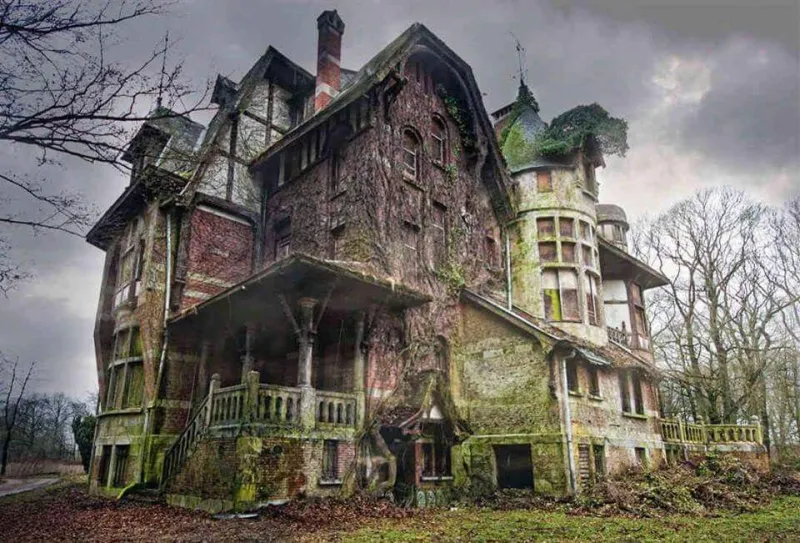
Photo: abandoned Southwest desert ghost town adobe buildings artist studio, via i.pinimg.com
Drive far enough down almost any state highway in Arizona, New Mexico, or Nevada and you'll eventually pass through a town that used to be something. A mining camp, a railroad depot, a ranching hub. The buildings are still there — often structurally sound, built from adobe or rough-cut stone in ways that have outlasted the industries that funded them. The population isn't.
Or it wasn't. That's starting to change.
The New Pioneers (And Why That Term Is Complicated)
Over the past several years, a loose but growing movement of artists, musicians, and creative workers has been quietly relocating to some of the Southwest's most depopulated communities. They're not arriving with venture capital or development plans. They're arriving with gear, with ideas, with the specific desperation of people who've been priced out of Albuquerque or Tucson or Los Angeles and need somewhere they can actually afford to make things.
The towns they're choosing aren't tourist destinations. We're talking about places with populations under a few hundred, sometimes under a hundred — communities that peaked economically in the early twentieth century and have been in slow decline ever since. Places where you can rent an entire building for what a studio apartment costs in Phoenix.
In Mogollon, New Mexico, a former silver-mining settlement in the Gila Wilderness, a handful of visual artists have established working studios in buildings that sat empty for decades. In Chloride, Arizona — a town of maybe 250 people in the Mohave County highlands — a loose community of painters and printmakers has taken root around a long-running local arts tradition that somehow survived the town's economic hollowing-out. Further west, in stretches of the California high desert that don't have the cachet of Joshua Tree, similar patterns are emerging.
None of this is entirely new. Artists have been gravitating toward cheap space forever. But the scale and intentionality of what's happening right now feels different.
What They're Building
The creative communities forming in these spaces aren't just collections of individuals who happen to live near each other. Many of them are deliberately structured as collectives, with shared resources, communal gallery or performance spaces, and explicit commitments to staying connected to the towns they've moved into rather than operating as parallel enclaves.
In one small Catron County, New Mexico settlement, a group that started as four people has grown to nearly thirty, operating a shared ceramics studio, a small press that publishes regional writing and art, and a monthly open gathering that draws people from a fifty-mile radius. They hold work sessions in the old post office building. They've partnered with the county historical society to document the town's history before living memory of it fades entirely.
"We're really conscious of the fact that we're guests here, in a sense," said one of the founding members, a painter who relocated from Denver three years ago. "The town existed before us and it'll exist after us. We're trying to contribute to something, not just extract cheap rent from it."
That ethos isn't universal — and the communities where it's missing tend to generate friction.
The Gentrification Question
It would be naive to tell this story without sitting with the uncomfortable parts. Ghost town revivals, however well-intentioned, carry real risks.
Some of these towns aren't entirely abandoned. They have small, often elderly, often economically vulnerable populations who've stayed through the lean decades. They have histories — Indigenous histories, Hispanic histories, working-class histories — that don't always align neatly with the values or aesthetics of the people arriving with cameras and screen-printing equipment.
Property values in a few of these communities have already started shifting. Not dramatically — these are still very cheap places to live — but the direction of travel is visible. In at least one southern New Mexico town that has attracted significant creative attention, longtime residents have started expressing concern about being romanticized rather than engaged with, about their town becoming an aesthetic backdrop for other people's projects.
"There's a version of this that's beautiful and a version that's extractive," said a preservationist with the New Mexico Historic Preservation Division who has been watching these dynamics play out. "The difference usually comes down to whether the people moving in are asking questions or just taking pictures."
It's a fair line to draw, and the most thoughtful actors in this movement seem genuinely aware of it.
Preservation, Ethics, and the Weight of Ruins
One of the more interesting tensions in the ghost town revival is the question of what to do with the physical spaces themselves. These buildings have histories. Some of them are historically significant. The impulse to repurpose them for studios and galleries can conflict with preservation ethics — especially when renovations, however modest, start altering structures that tell specific stories about specific people.
Some collectives have navigated this thoughtfully, working with state and local preservation offices, documenting changes, treating the buildings as collaborators rather than blank canvases. Others have been less careful, and the results — a Victorian-era storefront painted in desert pastels for Instagram aesthetics, a crumbling miner's shack converted into a vacation rental — can feel like erasure dressed up as revival.
The best outcomes seem to happen when artists arrive with genuine curiosity about the place, not just the space.
A Different Kind of Creative Economy
What makes the Southwest ghost town movement culturally interesting — beyond the obvious romance of it — is what it might be modeling for how creative communities organize themselves outside of traditional urban infrastructure.
These aren't art scenes built around galleries, labels, and institutions. They're built around proximity, shared resources, and a kind of radical self-sufficiency. People are making things without waiting for permission or infrastructure. They're creating their own contexts.
In a cultural moment when the cost of living in major creative cities has become genuinely prohibitive, that model has real appeal. And the Southwest — with its vast stretches of undervalued land, its long tradition of people coming out here to start over, its complicated and layered history — is a natural place for it to take root.
The neon isn't on yet in most of these towns. But the lights are flickering on.