Vacancy Signs and Algorithm Anxiety: What We Owe the Motels That Built the Highway
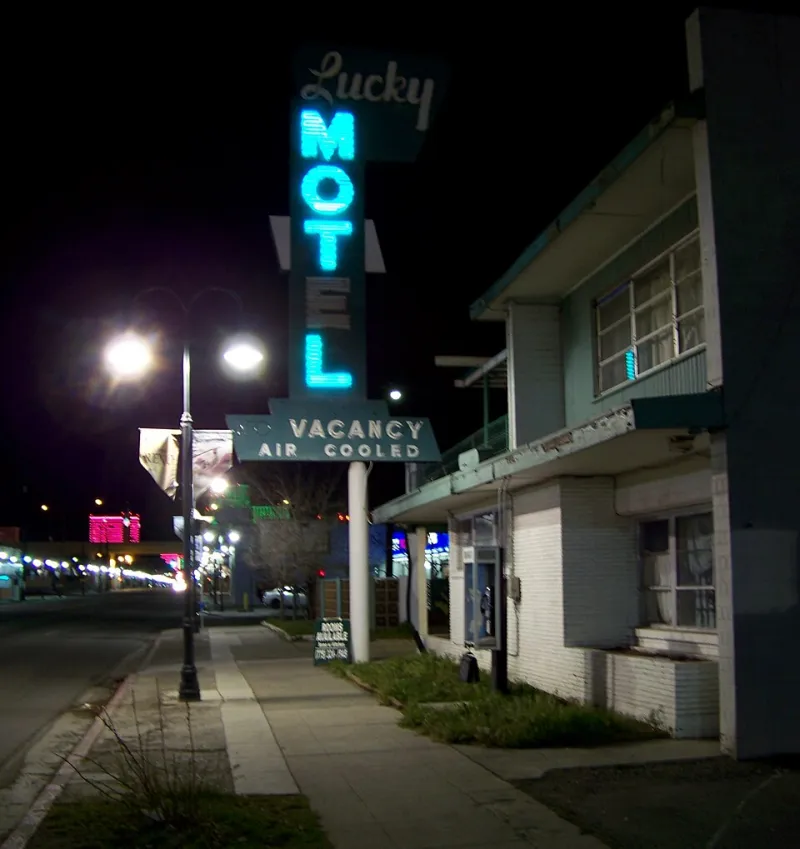
Photo: Scott Thompson, CC BY 3.0, via Wikimedia Commons
Here's an uncomfortable truth for those of us who love the neon: we are part of the problem.
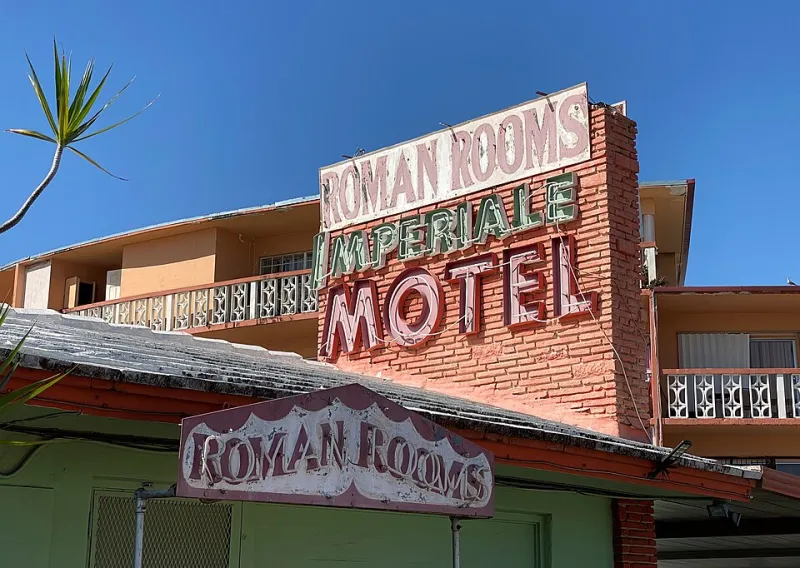
Every summer, thousands of travelers photograph the glowing signs of the Southwest's vintage motor courts — the arrow-flecked marquees of Tucumcari, the midcentury letterscapes of Flagstaff, the pastel courts of Kingman. We post them, we tag them, we drive on. The motel behind the sign, meanwhile, is trying to pay for a roof with a booking engine that buries it on page four.
The Booking App Squeeze
The economics are brutal and simple. Online travel agencies take commissions that can run 15 to 25 percent — a margin a 20-room family motel can't always absorb. Chain hotels have loyalty programs and revenue managers. The Blue Swallow has a proprietor who also fixes the ice machine.
And yet the properties that survive are adapting in ways the chains can't. They're leaning into what makes them un-replicable: the owner who tells you which stretch of the road to catch at sunset, the courtyard where strangers from three countries end up sharing a cooler by 9 p.m., the room that hasn't changed its bedframe since 1962 because the bedframe is the point.
Three Properties, Three Survival Strategies
The Preservationist. One Tucumcari motel has spent years restoring rooms to period accuracy — original tile, rebuilt neon, vintage phones that actually ring. The strategy is museum-grade authenticity, and it works because the owners treat every guest as a docent-in-training. Occupancy is strong, but so is the maintenance backlog.
The Adapter. A Flagstaff property has embraced the influencer economy without losing its soul — a photo-friendly courtyard, yes, but also honest rates, direct-booking discounts, and a policy of feeding road-trippers stuck without reservations. The owner's view: "If the algorithm wants to come in, fine, but it sleeps in the cheap room."
The Holdout. A West Texas motor court has changed almost nothing and refuses to apologize for it. No website beyond a single page. Word of mouth and repeat guests fill most rooms. It's the most fragile of the three models — and, its owner would argue, the most honest.
What Nostalgia Can't Pay For
My argument is this: we treat these motels like photo backdrops when they're actually small businesses performing cultural preservation for free. A designation on a historic register doesn't fix plumbing. A viral post doesn't train the next innkeeper.
If you love this road, book the room, not just the picture. Skip the aggregator, call the front desk, stay the night instead of snapping the sign. The vacancy light glowing at midnight is a promise the highway made in 1946. It only stays lit if somebody's behind the desk to flip it on.