Desert Cards, Digital Crowds: The Southwest Tarot Readers Rewriting What It Means to Go Viral
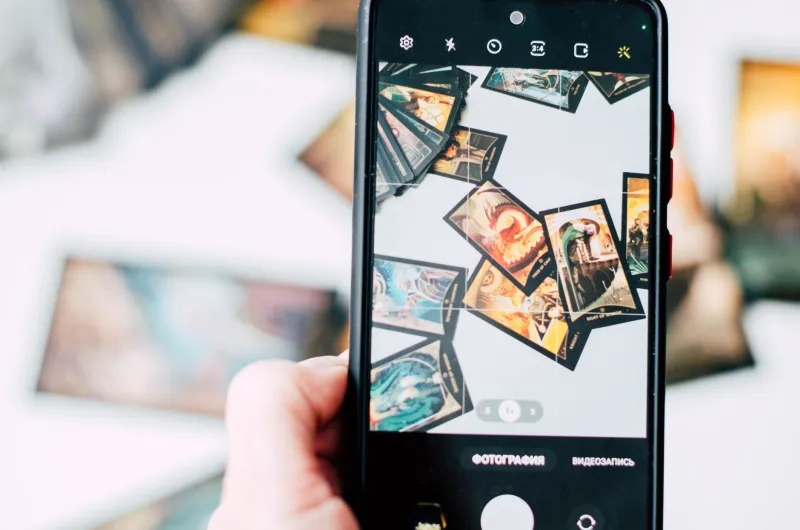
There's a particular kind of light you only get in the Sonoran Desert around golden hour — warm, almost amber, the kind that makes everything look like it was meant to be photographed. It's not a coincidence that some of TikTok's most-watched tarot readers have figured out how to bottle exactly that feeling into 60-second clips. Set up your deck near a southwest-facing window in Phoenix or Albuquerque, let that light do its thing, and suddenly you've got a backdrop that no ring light can replicate.
But the aesthetic is just the entry point. What's actually driving the rise of Desert-based tarot creators isn't sunsets — it's a specific kind of credibility that seems to radiate out of the region itself. The Southwest carries a cultural weight around mysticism and spiritual practice that other parts of the country simply don't have in the same way. When a reader in Sedona pulls a card on camera, there's an implied geography to it. The land is doing some of the work.
The Numbers Are Real, and So Is the Pressure
Some of these creators aren't small-time hobby accounts. Readers like Marisol V., who operates out of the East Valley and declined to give her last name for this piece, has crossed 400,000 followers on TikTok with a format that's deceptively simple: a single daily draw, minimal editing, and a few minutes of unhurried interpretation. No jump cuts, no dramatic music stings. "I think people are exhausted by the performance of it," she says. "They don't want a show. They want someone to sit with them for a second."
That slowness, paradoxically, is what made her account take off. But maintaining it while the algorithm nudges you toward higher frequency posting, trending audio, and engagement bait is a genuine daily negotiation. "TikTok wants you to post three times a day minimum if you want to grow. I post once. Sometimes not even that." She pauses. "My numbers dip when I do that. I've made peace with it."
Not everyone has. Other readers in the region describe a kind of content treadmill — producing pick-a-card videos, collective readings for zodiac placements, and "energy check" clips at a pace that starts to feel disconnected from what drew them to the practice in the first place. The language of tarot hasn't changed, but the context has warped around it.
Monetization and the Meaning Problem
The business side of spiritual content creation on TikTok is genuinely complicated, and the Desert community is having that conversation loudly. There's TikTok's native creator fund, which pays out fractions of a cent per view and is widely considered not worth the tradeoff in algorithmic dependency. There are link-in-bio funnels to Etsy shops, Patreon tiers, private Discord communities, and one-on-one reading bookings. Some readers have built sustainable income. Others have burned out trying.
Javier R., a Tucson-based reader who also teaches at a local metaphysical shop, puts the tension plainly: "The moment you start thinking about what performs well, you've introduced a filter that has nothing to do with the cards." He's not anti-monetization — he sells readings and has a modest Patreon. But he's deliberate about keeping his free content genuinely free of the kind of vague, broadly applicable language that tends to rack up saves and shares. "Pick-a-card videos work because they're designed to feel personal for everyone. That's not really a reading. That's a horoscope with extra steps."
This is a distinction the community debates constantly, sometimes publicly in comment sections, sometimes in the kind of quiet conversations that happen in DMs. Is a collective TikTok reading a legitimate spiritual offering, or is it content dressed up as practice? The answer probably depends on who's making it and why — but the question itself is worth sitting with.
Protecting the Practice in Public
One of the more nuanced conversations happening among Southwest readers is about what gets shared and what doesn't. Several practitioners with Indigenous or curandera lineages have drawn deliberate lines around certain practices, choosing to keep specific traditions offline entirely while engaging with tarot — which many view as a separate, more universally accessible tool — on social platforms.
Santa Fe-based reader and educator Daniela C. has written about this on her Substack, which functions as a longer-form companion to her TikTok presence. "Tarot itself has a complicated history — it's European, it's been commercialized for centuries, it doesn't belong to any one culture in the same way some other practices do. I'm comfortable putting it on camera. I'm not comfortable putting everything on camera."
That kind of discernment is increasingly rare in a content ecosystem that rewards total transparency and parasocial intimacy. The readers who seem to be navigating it best are the ones who've decided in advance what their public practice looks like — and stuck to it even when the algorithm pushed back.
What the Audience Actually Wants
Here's the thing that gets lost in the conversation about authenticity versus virality: the people watching these videos aren't passive consumers. The comment sections on the most thoughtful Desert tarot accounts read less like YouTube reaction threads and more like actual community spaces. People share what came up for them. They report back after a reading hit differently. They ask follow-up questions and get real answers.
Marisol checks her comments every morning. "That's the part that doesn't feel like work," she says. "Someone will say 'this reading described my whole week' and I know they mean it. That's not nothing."
There's something genuinely interesting happening at the intersection of ancient practice and new media, and the Southwest is right in the middle of it — not because the desert is mystical in some vague tourism-brochure way, but because the region has a long, complicated, living relationship with spiritual practice that gives its practitioners a particular kind of grounding. The neon glow of a phone screen and the slow burn of a desert evening aren't opposites. Out here, they've always coexisted.
The cards don't care about your follower count. The readers who are doing this well seem to have figured that out.