Gospel According to Glitter: The Drag Kings Turning Scripture Into a Southwest Stage Revolution
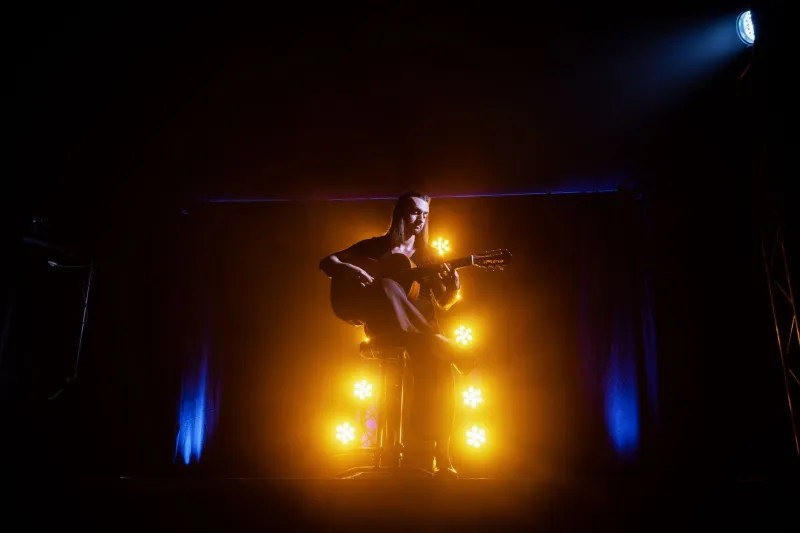
The venue smells like cheap beer and something sacred. A hand-painted banner hangs above the makeshift stage in a Tucson warehouse that used to move auto parts. It reads: He Who Has Ears, Let Him Hear the Remix. The crowd — a mix of queer kids in thrifted blazers, older folks who look like they drove in from somewhere quieter, and a handful of people who seem genuinely unsure how they ended up here — is absolutely losing it.
On stage, a performer named Brother Brimstone is lip-syncing the Book of Ezekiel over a pounding synth beat, dressed in a gold lamé suit with a bishop's collar made from aluminum foil. The whole room is on its feet.
This is what queer spiritual performance looks like in the desert right now. And it's not a novelty act.
The Movement Nobody Named Yet
Across the Southwest — Albuquerque, Phoenix, El Paso, Las Vegas, and a dozen smaller cities in between — drag kings and non-binary performers are building a loose but unmistakable tradition of reinterpreting religious texts through performance. Some call it sacred drag. Others just call it what they do on a Saturday night. Either way, it's filling rooms.
"I grew up in a Pentecostal household in Chandler," says Marcus Veil, who performs as the Reverend Magdalena King. "The church had this enormous emotional power — the music, the call and response, the whole theatrical architecture of a revival. When I came out and got pushed out of that world, I didn't stop needing those things. I just had to build them myself."
Veil's sets pull directly from the New Testament — particularly the stories of figures the church historically sidelined. Mary Magdalene. The woman at the well. Doubting Thomas. Performed in full king drag with a carefully groomed beard and a preacher's cadence, these aren't parodies. They're close readings. Angry, tender, and deeply researched close readings delivered in front of a disco ball.
Camp as Theology
What makes this movement distinct from standard drag performance — or from the broader tradition of queer artists engaging with religion — is the deliberate, almost scholarly attention to the source material. These performers aren't just slapping a cross on a costume for shock value. Many of them have spent years inside the traditions they're now reworking.
Soledad Cruz, who performs as Santo Diablo in the Albuquerque scene, spent three years in a Catholic seminary before leaving. Her sets incorporate Gregorian chant samples, Nahuatl prayer fragments, and Virgin of Guadalupe iconography in ways that feel less like provocation and more like grief work.
"Camp isn't the opposite of sincerity," Cruz says, leaning against the bar after a show. "Camp is what happens when you love something so much and it still rejects you. That tension — that's where the art lives."
Audiences seem to feel it. A woman named Diane, who drove up from Socorro for one of Cruz's shows, describes herself as a lapsed Catholic who hasn't set foot in a church in fifteen years. "I cried during the Guadalupe section," she says, still looking a little surprised by this. "I didn't expect to. But it felt like something I'd been holding for a long time finally had somewhere to go."
Desert Stages as Sanctuaries
The venues hosting this work are an eclectic bunch. Some are established queer bars that have started programming intentional performance nights. Others are pop-ups in galleries, backyards, and rented event spaces that exist for a single night and then disappear. The Southwest's sprawling geography and relatively low cost of entry for independent venues has made it easier to build these spaces outside of the traditional arts infrastructure.
"We don't need a grant or a nonprofit board to put on a show," says Tomás Reyes, who co-organizes a monthly performance night called Burning Psalms in a Phoenix garage venue. "We need a sound system, a lighting rig we borrowed from somebody's cousin, and performers who have something real to say. The desert gives you that kind of freedom."
Reyes is careful to note that Burning Psalms isn't explicitly anti-religion. Several of the regular performers still practice faith traditions — just not in forms their families would recognize. "We've had a Diné performer do a set that drew on both their traditional ceremonial background and Christian imagery from their mission school history. That was one of the most complex, beautiful things I've ever seen on a stage. It wasn't anti-anything. It was about surviving contradiction."
The Pushback Is Real
Not everyone in the Southwest is charmed by any of this. Several shows have faced protests from local religious groups. A Las Vegas venue that hosted a particularly high-profile Sacred Drag Night last spring received enough complaints that the landlord briefly threatened to terminate the lease. The performers involved documented the whole thing on social media, which predictably turned the situation into a national news blip before the story moved on.
"The anger is actually useful information," says Brother Brimstone, whose real name he keeps private for safety reasons. "When people are that upset about a drag king reading Ezekiel out loud, you have to ask: what is it about this specific thing that feels like such a threat? Because it's not like we're hiding. We're doing this in front of audiences who chose to be there."
He pauses. "I think the threat is that we're taking the text seriously. We're not dismissing it. We're saying it belongs to us too."
Something Like a Congregation
What's emerging in the Southwest isn't quite a movement, isn't quite a scene, and definitely isn't a church — though it borrows freely from all three. It's a collection of individual artists who found each other across vast stretches of desert highway and started building something that doesn't have a name yet.
The audiences keep coming back. Some come for the spectacle. Some come because they're lonely in a specific way that queer people who grew up religious understand. Some come because they heard the music from outside and wandered in.
At the end of the Tucson show, Brother Brimstone steps out of the spotlight and into the crowd. Someone hands him a beer. A stranger thanks him for a line from the set — something from the Book of Ruth, about going where someone else goes, staying where they stay. The stranger says it made them think of a relationship they lost. Brimstone nods like a pastor who has heard this kind of thing before.
Because in this particular desert, on this particular night, that's basically what he is.