Sky Readers in the Sand: How Southwest Astrologers Are Making Sense of 2025's Chaos
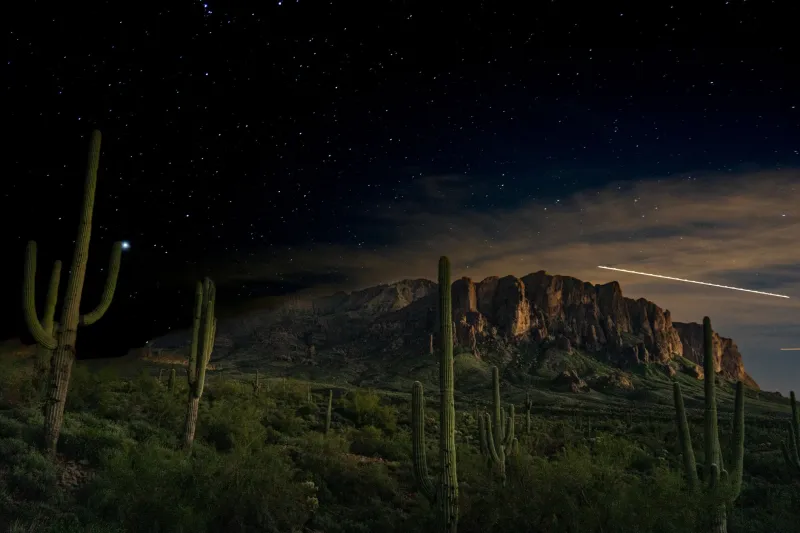
There's a particular kind of clarity you get at 4 a.m. in the high desert. The sky doesn't just show you stars out here — it shows you everything. No light pollution, no ambient hum, just the whole cosmic arrangement laid out flat and honest above the scrub. It's the kind of view that makes you understand, maybe for the first time, why people have been reading the sky for meaning since before they had words for it.
That context matters when you're trying to understand why Southwest astrology feels so different from what you find trending on Instagram or packaged inside a $47 digital workshop. The practitioners operating out of Tucson, Albuquerque, El Paso, and smaller desert towns scattered between them aren't working from the same cultural template as their coastal counterparts. They've got their own mythology, their own relationship to the land, and their own read on what 2025 is actually about.
A Different Kind of Forecast
Ask any working astrologer in the region what makes 2025 significant and you'll get a version of the same answer delivered in wildly different vocabularies. Pluto has fully settled into Aquarius. Saturn and Neptune are moving toward a conjunction in Aries that hasn't happened since the mid-1980s. Uranus is finishing its run through Taurus. Stack those up together and you've got the kind of chart that serious practitioners describe, without much irony, as a once-in-a-generation reshuffling.
Mainstream astrology content tends to translate that into lifestyle advice — what it means for your relationships, your career pivots, your healing arc. Southwest practitioners are doing something more specific. They're mapping those alignments onto what's actually happening in the region: water rights battles, border policy whiplash, the slow economic strangulation of rural communities, and the particular kind of cultural pressure that builds when a place gets "discovered" by people who don't understand it.
"The desert already knows how to survive collapse," says one Tucson-based astrologer who runs a small practice out of her home near the Rincon Mountains. "That's not pessimism. That's the whole story of this landscape. Everything out here has figured out how to hold on through the hard season."
That's the framing that keeps coming up — not doom, not toxic positivity, but something more like ecological realism applied to human experience.
Regional Mythology as Interpretive Tool
What separates the desert practitioners from the broader astrology content machine isn't just tone. It's the interpretive layer they're working with. Where a New York or L.A.-based astrologer might reach for Jungian archetypes or pop culture shorthand, the Southwest crowd is more likely to pull from the actual landscape.
The Sonoran Desert, the Chihuahuan, the Mojave — each has its own character, its own seasonal logic, its own relationship between scarcity and abundance. Practitioners here use that as a live reference point. Pluto in Aquarius becomes a conversation about aquifer depletion and who controls the water table. Saturn-Neptune starts sounding like the tension between the myth of the Southwest frontier and the grinding material reality of living in it.
One Albuquerque-based astrologer, who publishes a monthly forecast newsletter that's quietly built a few thousand subscribers without any real social media push, puts it plainly: "I'm not interested in translating the sky into something palatable for people who've never been here. I want to talk about what it means for someone who knows what it's like when the monsoon doesn't show up."
That's not an abstract reference. The 2025 monsoon forecast for much of the region is already looking shaky. When you're working with clients who are ranchers, small farmers, or just people whose daily life is shaped by water availability, your astrology has to carry some actual weight.
The Collapse Question
The word "collapse" keeps surfacing in these conversations, and it's worth sitting with how differently it lands here than it might in a coastal context. In a lot of mainstream spiritual spaces, collapse is almost romantic — a clearing, a reset, a chance for something new. In the Southwest, collapse has a more specific texture. You can see it in the abandoned mining towns, the dried-up riverbeds, the communities that got left behind when the economy moved on.
The astrologers working here aren't indulging in apocalypse fantasy. They're doing something more grounded — acknowledging that disruption is already a fact of life in the region and trying to offer people tools for navigating it. That's a different service than what most spiritual content provides.
"People come to me because they want to feel less crazy," says a practitioner based out of a small studio in Las Cruces. "They're watching things fall apart in ways that feel personal and systemic at the same time, and they want someone to tell them that there's a pattern to it. That's what I try to do. Not predict the future. Just name the pattern."
There's a community function happening here that's easy to underestimate. In places where traditional institutions have thinned out — fewer churches doing real community work, fewer civic organizations, fewer third spaces in general — the local astrologer sometimes ends up holding a kind of connective tissue role. People gather around the forecast the way they used to gather around other kinds of shared meaning-making.
The Anti-Algorithm Crowd
It's worth noting that most of the practitioners doing this work are deliberately staying small. Some have newsletters. A few have modest social followings. Most are working through word of mouth, local markets, and the kind of slow-burn reputation that takes years to build.
That's not accidental. There's a real wariness in this community about what happens when astrology content gets optimized for engagement. The viral stuff flattens everything — reduces complex interpretive work to shareable hot takes, strips out regional specificity, turns the whole practice into a content format.
The desert practitioners mostly want nothing to do with that. They're interested in depth over reach, in the long conversation rather than the quick hit. That makes them harder to find, but more valuable when you do.
What the Sky Is Actually Saying
If you push these practitioners for a bottom line on 2025, they resist the urge to make it clean. The Saturn-Neptune conjunction building through the year is getting described as a slow dissolution of false structures — things that looked solid but were always held together by narrative more than substance. In a region where so much of the mythology (the frontier, the boom town, the endless growth) has already started cracking, that framing hits differently.
The Pluto-in-Aquarius thread gets read as a reckoning with collective systems — who has access to resources, who gets to define community, what the word "public" even means anymore. Again, not abstract out here. These are live questions in every Southwest city and a lot of the towns between them.
What the desert astrologers are offering isn't a prediction. It's a vocabulary. A way of talking about the particular strangeness of this moment that acknowledges the weight of it without collapsing into either panic or false comfort.
Out here, the sky has always been the biggest thing in the room. It makes sense that the people who read it most carefully are the ones who've spent their lives underneath it.