Two Deserts, One Night: The Widening Gulf Between Southwest Nightlife's Haves and Have-Nots
Photo: nightlife neon lights Southwest bar crowd underground party, via store.proebiz.com
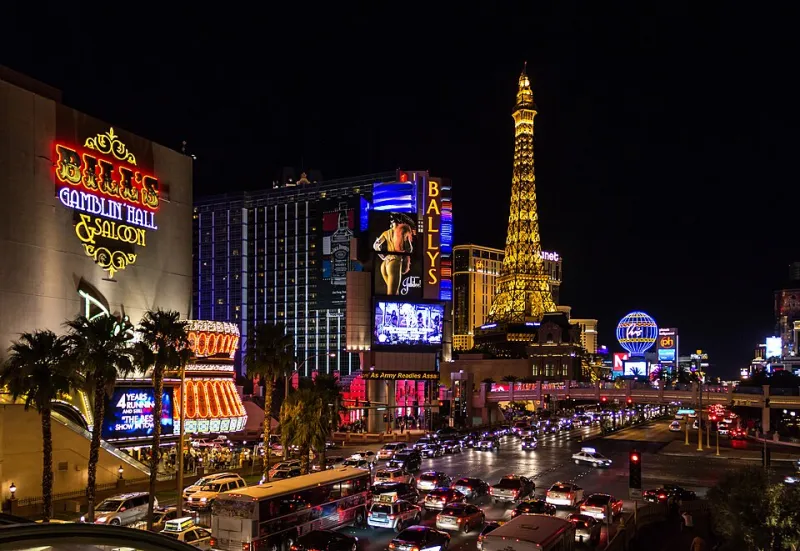
Saturday night in Las Vegas. In one corner of the city, a DJ whose name you recognize from festival lineups is playing a residency at a resort venue that charges $40 for a cocktail and requires a reservation made three weeks in advance. Twelve miles away, in an industrial neighborhood most tourists will never find on a map, a local promoter is charging $10 at the door for a party that will run until sunrise — no dress code, no bottle service, no photographer circling the room looking for content.
Both of these are real. Both of them are Southwest nightlife in 2024. And the distance between them is growing.
The Boom That Didn't Lift All Boats
The past several years have been genuinely transformative for entertainment infrastructure across Arizona, New Mexico, and Nevada. Tourism surged post-pandemic. Development money flooded into downtown Phoenix and the Vegas corridor. New hotel properties brought with them new venue concepts — rooftop bars, multi-room clubs, immersive experience spaces with lighting budgets that would fund a regional theater company for a year.
For the right slice of the market, this has been fantastic. A certain kind of nightlife consumer — higher income, brand-conscious, experience-focused, reliably content-generating — now has more options in the Southwest than ever before.
For everyone else, the math has gotten harder.
Rents on commercial spaces have climbed steeply in most Southwest metros. The same economic forces pricing families out of their neighborhoods are pricing out the dive bars, the mid-size live music rooms, and the flexible warehouse spaces that have historically been the incubators of genuine local scenes. When a landlord can lease a space to a high-end cocktail concept at three times what a grassroots promoter can afford, the outcome isn't difficult to predict.
"We lost four venues in eighteen months," said one Phoenix-based promoter who has been running underground electronic music events since the early 2010s. "Not because they weren't full. Because the buildings got sold."
The Instagram Venue and Its Discontents
It would be easy — and a little lazy — to simply frame the high-end side of this split as the villain. The reality is more nuanced. Some of the new luxury venues are doing genuinely interesting programming. Some are booking local artists alongside national names. Some are creating jobs and economic activity in neighborhoods that needed both.
But there's a specific type of venue that has proliferated in this boom cycle that even people who can afford it are starting to find hollow: the space designed primarily as a backdrop. The rooftop bar whose main function is to appear on social media. The club where the guest list management is more rigorous than the sound system. The "immersive" experience that's essentially an elaborate photo opportunity with a DJ in the corner.
These spaces serve a real demand — people genuinely want beautiful environments and the social currency that comes with being seen in them. But they have a tendency to crowd out spaces that serve a different kind of demand: the desire to actually lose yourself in music, to encounter something unexpected, to be in a room where the vibe wasn't engineered by a hospitality consultant.
Regular nightlife-goers in Phoenix and Albuquerque describe the experience of scanning their options on a Friday night as increasingly binary. "It's either spend $200 minimum or figure out where the underground thing is happening this week," as one Scottsdale resident put it. "The middle ground is basically gone."
The Underground Refuses to Die
Here's the thing about the Southwest's grassroots nightlife scene: it has survived worse conditions than this, and its practitioners are not particularly interested in surrendering.
Across the region, a network of promoters, DJs, artists, and dedicated regulars has spent the past few years adapting to the economic pressure with a creativity that would be genuinely impressive if it weren't born of necessity. Pop-up events in art galleries. Desert location parties held on private land outside city limits. Warehouse events announced 48 hours in advance through encrypted group chats and word of mouth. Residencies built in unconventional spaces — laundromats, record shops, parking structures — that don't have the overhead of a traditional venue.
This underground infrastructure is doing something the luxury tier can't replicate: it's where the actual culture gets made. The DJs who will eventually headline those resort residencies are learning their craft in these rooms. The sounds that will eventually define the next phase of Southwest music are being tested in front of crowds of 200 people who showed up because they genuinely cared.
"The expensive venues follow the culture," said one Albuquerque promoter who runs a monthly event that has become something of an institution in the city's electronic music community. "They just do it with better lighting."
Generational Fault Lines
The split isn't purely economic — it's also generational, and the two things are intertwined in ways that complicate easy narratives.
Older nightlife regulars and industry veterans tend to be more attached to the idea of dedicated spaces — actual clubs, actual bars, actual venues with history and character. Younger participants, particularly in their early twenties, have grown up in an era where the event is the thing, not the room. They're more comfortable with pop-ups and temporary spaces, more fluent in the social media logistics of finding underground events, and arguably less nostalgic for a venue culture they never fully experienced.
This generational flexibility is part of what's keeping the underground alive. It's also creating a certain fragility — events without permanent homes are easier to shut down, easier to lose to permit problems or noise complaints, easier for the scene to forget once the next thing comes along.
What Gets Lost in the Split
The version of Southwest nightlife that's most at risk isn't the luxury tier — that has capital behind it and will be fine. And the underground, as discussed, has a stubborn vitality. What's disappearing is the middle: the medium-sized venues with consistent programming, the bars that were good enough to attract a real crowd but not so expensive they priced out the regulars, the spaces where a local DJ could build a following over years rather than months.
That middle tier was where scenes developed staying power. It was where the culture had time to breathe.
The neon still burns bright across the Southwest — brighter than ever in some zip codes. But what it's illuminating is increasingly one of two things: a very expensive good time, or something happening in the dark that you have to already know about to find. The space between those two options is where a lot of what made this region's nightlife worth talking about used to live.
Finding ways to preserve that space — or rebuild it — might be the most important creative challenge facing the Southwest's entertainment culture right now.