Scrolling Into the Sacred: How Southwest TikTok Mystics Are Blowing Up the Divination Gatekeepers
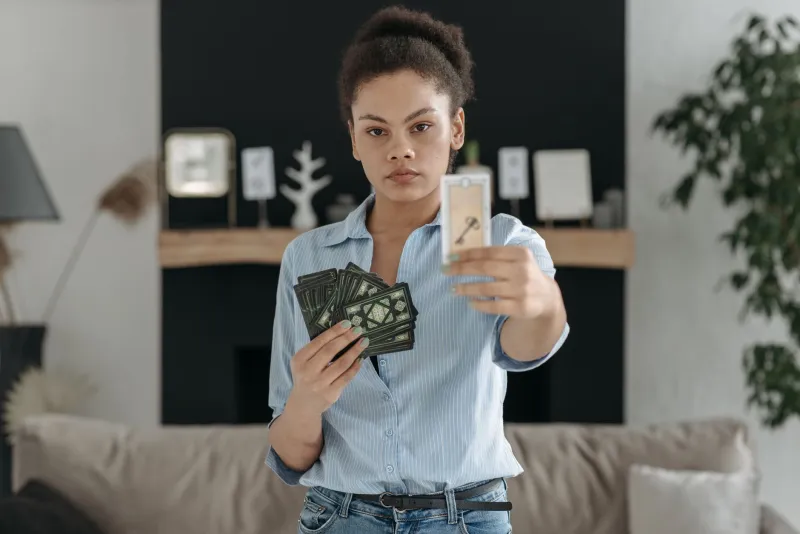
Somewhere between a ring light and a spread of hand-painted tarot cards, Marisol Vega is pulling the Tower for a Tuesday morning audience of 340,000 followers. She's sitting cross-legged on her apartment floor in Albuquerque, a string of turquoise hanging low on her neck, desert light cutting through the blinds behind her. The caption reads: for whoever needs this today. By noon, the video has 80,000 views.
"I never set out to be a spiritual influencer," she says, laughing a little at the phrase. "I just needed somewhere to put what I already knew."
What Vega knows — and what she's sharing at a pace that would've been unimaginable to the practitioners who came before her — is a dense, layered fluency in tarot, natal astrology, and folk-rooted curandera traditions passed down through her family in the Rio Grande Valley. A decade ago, that kind of knowledge lived in dim storefronts, in hushed one-on-one sessions, in spaces where you had to know someone to even get through the door. Now it lives in your pocket, served up between a cooking hack and a dog video, free and immediate and relentlessly accessible.
This is the new Southwest spiritual landscape. And it's making some people very uncomfortable.
The Algorithm as Oracle
TikTok's #WitchTok community has been a slow-building phenomenon since roughly 2019, but what's happening in the Southwest feels distinct — more rooted, more specific, shaped by the particular cultural DNA of this region. Arizona, New Mexico, Nevada, and Southern California are generating a cluster of creators who aren't just doing generic crystal content. They're pulling from Indigenous cosmologies, Mexican curanderismo, Chicanx feminist spirituality, and the DIY desert punk ethos that runs through the whole region's creative culture.
Creators like Phoenix-based Dani Rael, who blends Nahuatl calendar systems with Gen Z meme language in her videos, or Las Vegas's Tomás Archuleta, whose short-form astrology breakdowns routinely go viral in Spanish-language spiritual communities across the US and Latin America. These aren't people performing mysticism for aesthetic clout. Most of them grew up inside these traditions. The phone is just the new medium.
"The format forces you to be clear," says Rael, who has been reading cards professionally since she was nineteen and started posting videos during the pandemic. "You've got sixty seconds to explain a concept that some people gatekeep behind a hundred-dollar session. Either you can do that or you can't."
She can. Her video explaining the difference between sun sign and rising sign astrology has over two million views.
The Gatekeepers Push Back
Not everyone is celebrating the democratization. Spend any time in the comment sections of these videos — or in the private Facebook groups and Discord servers where more established practitioners gather — and you'll find a genuine, sometimes heated debate about what gets lost when ancient practice gets compressed into algorithm-friendly content.
Santiago Morales has been running a metaphysical shop in Tucson for over twenty years. He sells crystals, yes, but also leads workshops on ceremonial practice, hosts community grief rituals, and has spent decades building relationships with Indigenous elders who've trusted him with knowledge that took years to earn. He's not a TikTok hater — he's thoughtful, measured, clearly not dismissing the creators out of hand. But he has questions.
"When you watch a three-minute video about obsidian protection grids, you're getting maybe five percent of what there is to know," he says. "And the danger isn't that people learn a little — the danger is that they think they've learned everything. Spiritual practice has always required relationship. With teachers, with community, with time. The algorithm doesn't have time."
He also raises something harder to argue with: the money question. Many of the most successful TikTok mystics are monetizing through merchandise, Patreon memberships, paid reading services, and brand deals — sometimes with companies selling crystals of questionable ethical sourcing or supplement brands with sketchy wellness claims. The line between spiritual guidance and spiritual marketing can get blurry fast.
"I've seen kids drop two hundred dollars on a crystal kit they found through a TikTok creator," Morales says. "The creator gets a commission. The kid gets a box of rocks with no context. That's not democratization. That's just a different kind of gatekeeping with a prettier door."
Sacred and Scrollable
The creators themselves are largely aware of these tensions — and more thoughtful about navigating them than the criticism sometimes gives them credit for.
Vega has turned down multiple brand partnerships, including one with a major wellness company that wanted to co-brand a tarot deck. "They wanted to own the IP," she says flatly. "No."
She's also started including what she calls "go deeper" resources at the end of her videos — books, local practitioners, community organizations — specifically to push viewers toward embodied learning rather than infinite scroll. "I'm not trying to be anyone's only teacher. I'm trying to be a door."
Archuleta, the Las Vegas-based astrologer, runs a sliding-scale reading practice alongside his content creation and regularly uses his platform to promote other practitioners, particularly older women in his community whose knowledge he considers irreplaceable. "I learned from people who will never be on TikTok," he says. "That's a debt. You pay it back by pointing people toward the real thing."
This tension — between accessibility and depth, between viral reach and earned wisdom — isn't unique to spiritual content. It's the same argument playing out in every corner of culture where the internet has flattened traditional hierarchies. Medicine, law, mental health, craft brewing. Everywhere you look, the gatekeepers are losing their grip and trying to figure out if that's liberation or catastrophe.
The Desert Has Always Been a Testing Ground
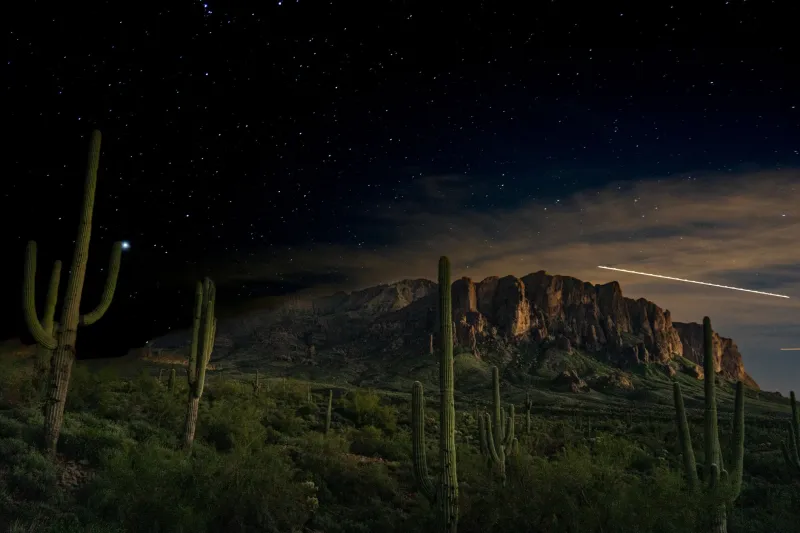
Maybe it's fitting that this particular version of the argument is happening here. The Southwest has never been great at respecting inherited authority. There's something in the landscape — the scale of it, the indifference of it — that tends to produce people who figure things out for themselves and share what they find.
The mystics going viral on TikTok are doing something the region's underground culture has always done: taking knowledge that was controlled by the few and moving it toward the many, trusting that people can handle it. Sometimes they're right. Sometimes they oversimplify. Usually it's somewhere in between.
What's clear is that the conversation about spiritual practice in the Southwest — who gets to lead it, who gets to learn it, what it costs and what it's worth — is louder and more contested than it's been in a long time. The algorithm didn't start that conversation. But it sure turned up the volume.
Vega pulls one more card before the camera cuts. The Star. Hope after upheaval. New light breaking over a landscape that just got turned inside out.
"For whoever needs this," she says again. The comments fill up in seconds.